Vegan Coconut Curry
 Add Preferred Source
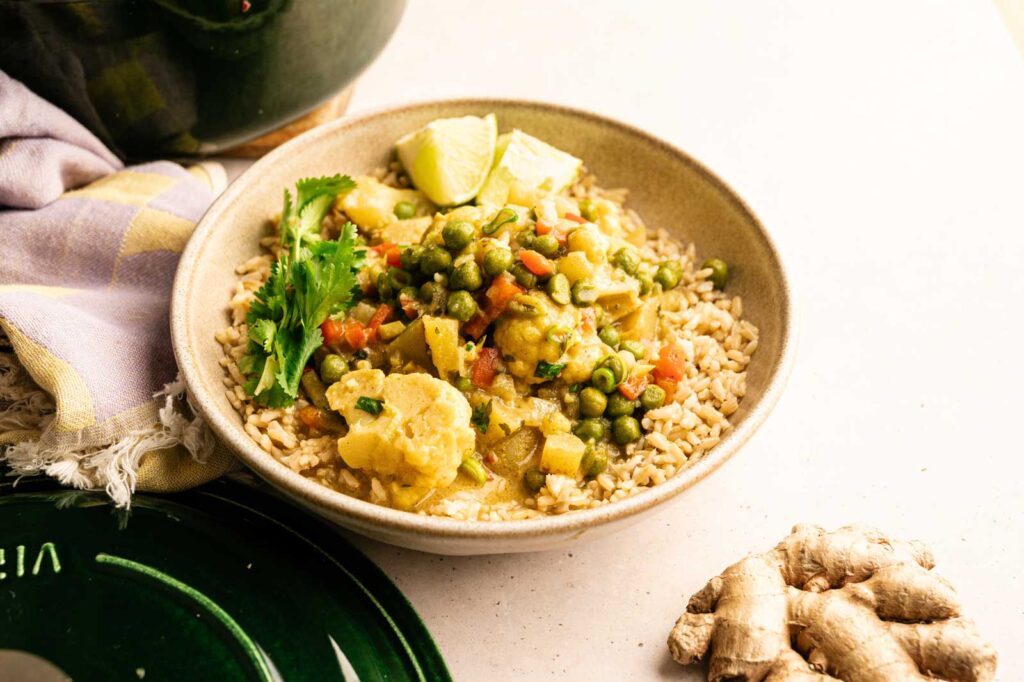
Making Vegan Coconut Curry at home is one of those cooking moments where the whole kitchen fills with warmth before the pot even makes it to the table. Tender cauliflower florets, cubed potatoes, red bell pepper, and sweet peas all simmered in a creamy coconut milk sauce with ginger, garam masala, and coriander that blooms into something rich and silky. Fragrant, comforting, and beautiful in the bowl.
This post contains affiliate links. As an Amazon Affiliate, if you purchase through those links, I earn a commission. Thank you!
It’s my go-to for weeknight dinners, meal prep, potlucks, and dinner parties when I want something impressive without a lot of fuss. Leftovers keep in the fridge for up to 4 days and the curry actually tastes even better the next day once all the spices have had time to meld. It also freezes well for up to 3 months.
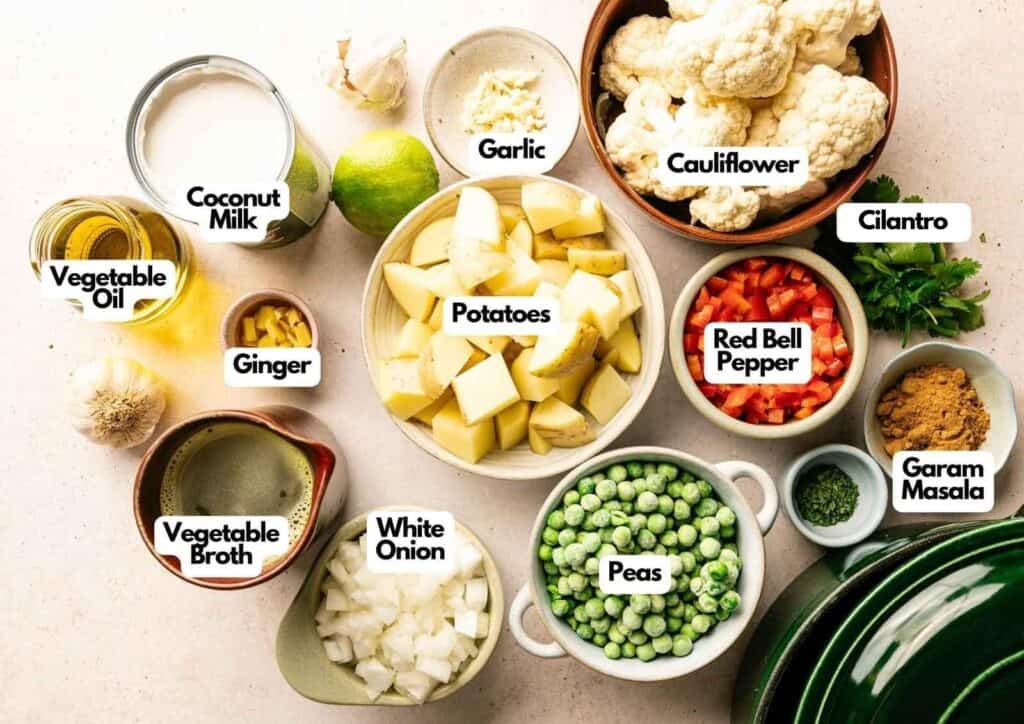
Ingredients You’ll Need
You’ll need all the ingredients shown in the photograph below.
How to Make Vegan Coconut Curry with Step-By-Step Instructions
Scroll down for the full recipe card containing a full printable recipe and measurements in both US customary and metric units.
This coconut curry recipe draws from both Thai curry and Indian curry traditions, giving it that warm, aromatic depth you’d expect from your favorite restaurant dish. Here’s everything you need to know to get a perfect pot on the table.
Heat the Oil and Cook the Onion
Heat the vegetable oil in a large pan or a large deep skillet over medium heat. I always use a Dutch oven for curries because it distributes heat evenly and keeps things from scorching.
Add the chopped onion and cook for about 3 minutes, until softened. You can swap the vegetable oil for coconut oil for a deeper coconut flavor.
Add the Garlic and Ginger
Stir in the minced garlic and ginger and cook for another 1 to 2 minutes, until fragrant. Make sure to finely mince the garlic ginger so they melt into the sauce. This garlic press makes the job so much faster and gives you a really fine mince.
Don’t rush this step because that bloomed garlic and ginger aroma is what builds the flavor foundation of the whole dish.
Cook the Vegetables
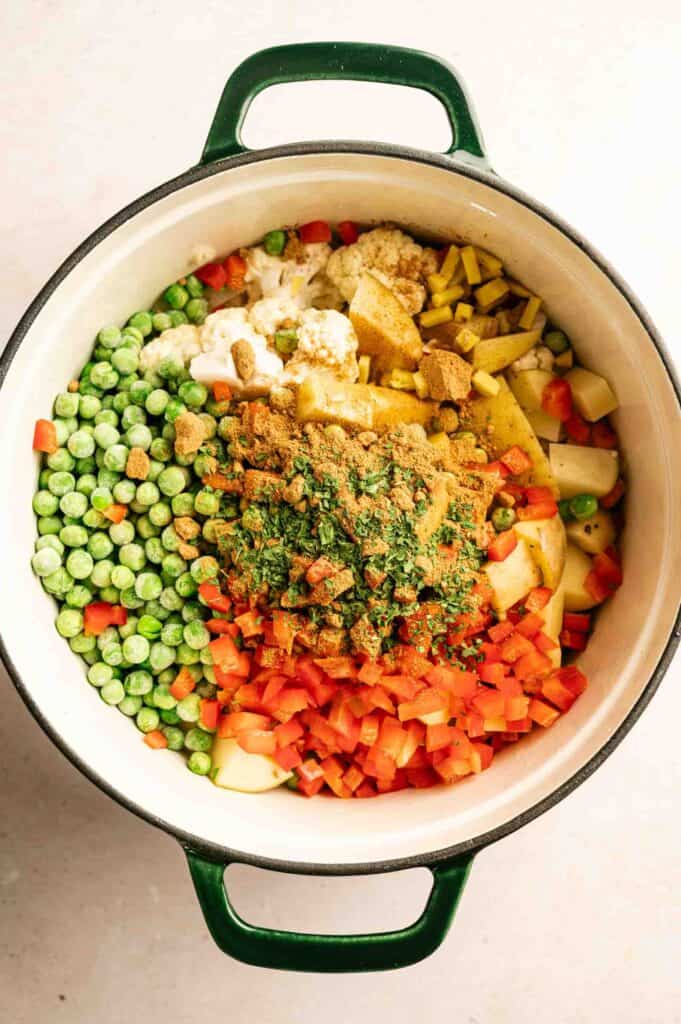
Throw in the cauliflower, potatoes, bell pepper, and peas. I like using a long-handled wooden spoon for stirring at this stage, so everything gets coated in those aromatics without breaking apart the vegetables.
Cook for 3 to 4 minutes, stirring occasionally. You can also toss in snow peas, green beans, or baby spinach for extra greens, and sweet potatoes work beautifully here as a swap or addition alongside the regular potatoes. Add an extra red bell pepper for more color and sweetness if you like.
Season the Pot
Season with the crushed red pepper, ground coriander, garam masala, salt, and black pepper. Stir in a tablespoon of red curry paste along with the dry spices to deepen the curry sauce, or boost the flavor further by adding curry powder alongside the garam masala.
Sprinkle a pinch of cayenne pepper or a fresh chili pepper for more heat. Give everything a good stir so the spices coat the vegetables evenly.
Add the Broth and Coconut Milk
Pour in the vegetable broth and full-fat coconut milk. Use full-fat coconut milk. It gives the sauce that thick, creamy texture. Light coconut milk will work, but the sauce won’t be as rich.
Stir well and bring everything to a gentle simmer. For a thicker sauce, use coconut cream instead of coconut milk, or stir in a little more coconut milk for a looser consistency.
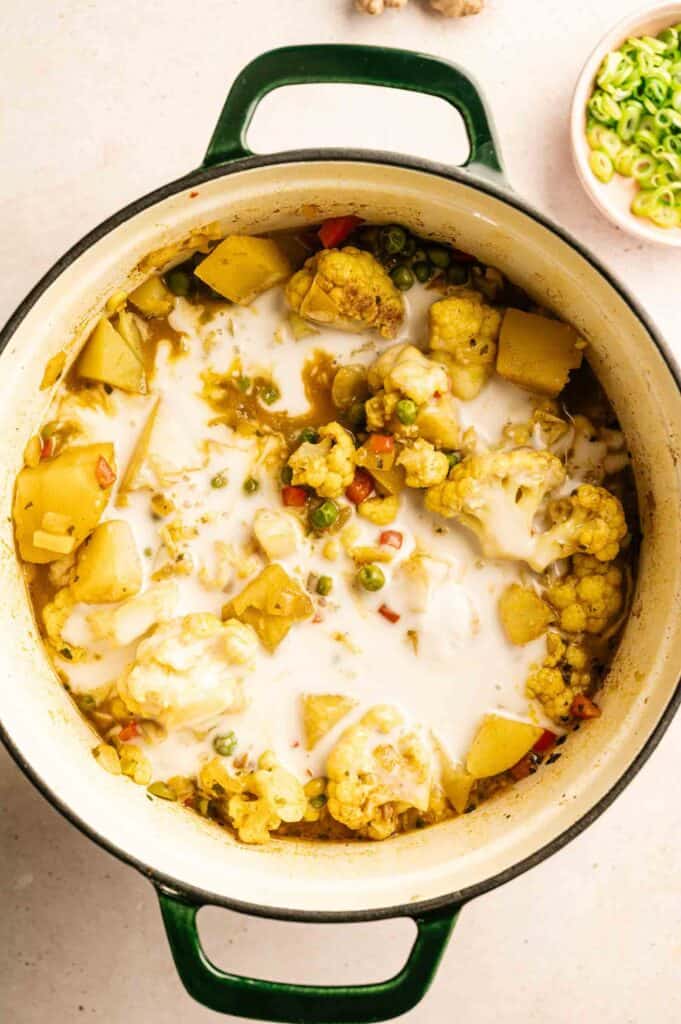
Lite coconut milk is a lighter option if you prefer. A small splash of soy sauce adds a savory, umami depth to the base, and a squeeze of lime juice or fresh lemon juice brightens the whole curry beautifully. A citrus squeezer makes it easy to get every drop of juice without the seeds.
Simmer Until Tender
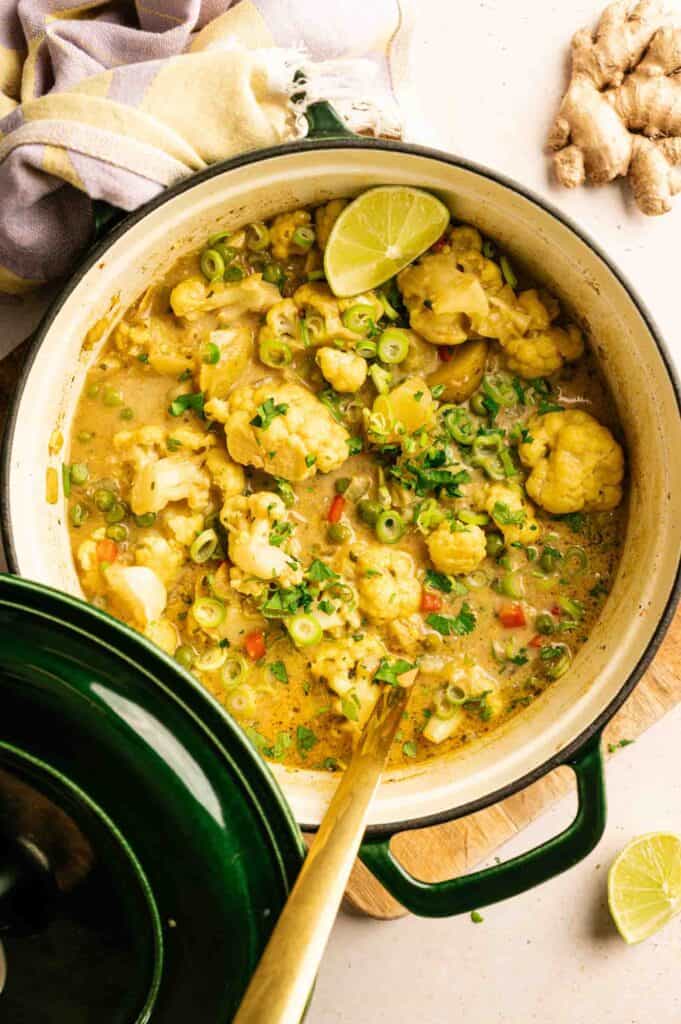
Reduce the heat to medium-low and cook for about 10 to 15 minutes, or until the vegetables are tender. If you’re using frozen peas, stir them in during the last few minutes of simmering rather than at the beginning so they stay bright and tender.
The sauce will thicken beautifully as it simmers and the whole kitchen will smell absolutely wonderful.
Finish and Serve
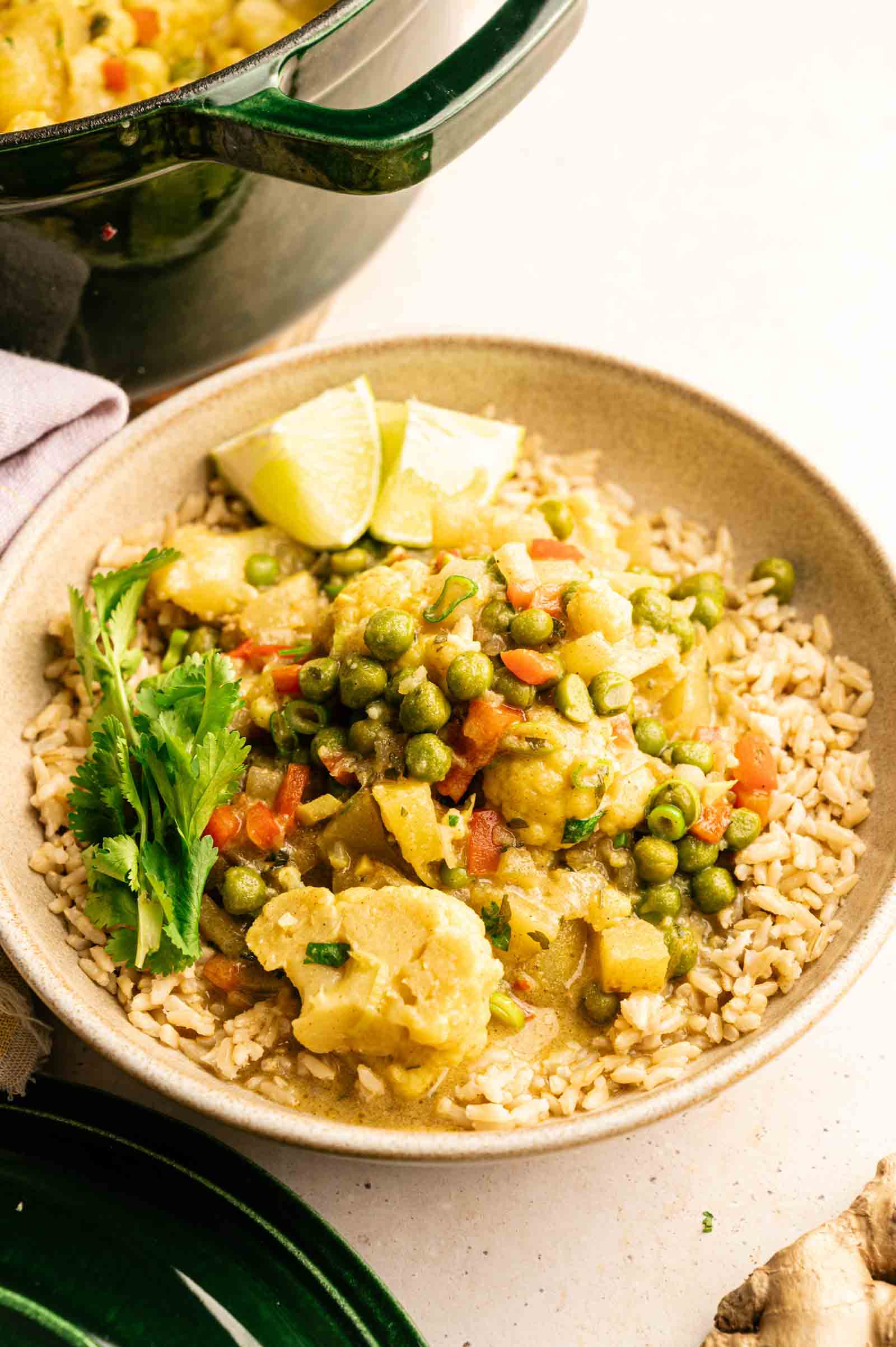
Stir in the fresh cilantro and adjust seasoning if needed. Serve warm over jasmine rice or brown rice and garnish with extra cilantro and additional lime wedges on the side for squeezing over at the table. Enjoy!
Transfer leftovers or portions for transport into a leak-proof container with a tight-fitting lid to keep the sauce from spilling. It stays warm in an insulated casserole tote for a couple of hours, making it a great recipe for potlucks and dinner parties.
Ingredients
- 2 teaspoons vegetable oil
- 1 cup white onion chopped
- 3 garlic cloves minced
- 2 teaspoons fresh ginger minced
- 2½ cups cauliflower chopped
- 2 cups potatoes peeled and cubed
- ½ cup red bell pepper cubed
- ½ cup peas fresh or frozen
- ¼ teaspoon crushed red pepper
- ½ teaspoon ground coriander
- 1 teaspoon garam masala
- Salt and black pepper to taste
- ½ cup vegetable broth
- 1½ cups full-fat coconut milk
- Fresh cilantro for garnish
Instructions
- Heat the vegetable oil in a large pot over medium heat. Add the onion and cook for about 3 minutes, until softened.2 teaspoons vegetable oil, 1 cup white onion
- Stir in the garlic and ginger and cook for another 1–2 minutes, until fragrant.3 garlic cloves, 2 teaspoons fresh ginger
- Add the cauliflower, potatoes, bell pepper, and peas. Cook for 3–4 minutes, stirring occasionally.2½ cups cauliflower, 2 cups potatoes, ½ cup red bell pepper, ½ cup peas
- Season with crushed red pepper, coriander, garam masala, salt, and black pepper.¼ teaspoon crushed red pepper, ½ teaspoon ground coriander, 1 teaspoon garam masala, Salt and black pepper
- Pour in the vegetable broth and coconut milk. Stir well and bring to a gentle simmer.½ cup vegetable broth, 1½ cups full-fat coconut milk
- Reduce the heat to medium-low and cook for about 10–15 minutes, or until the vegetables are tender.
- Stir in fresh cilantro and adjust seasoning if needed.
- Serve warm over rice and garnish with extra cilantro if desired.Fresh cilantro
Notes
- Use full-fat coconut milk: It gives the sauce that thick, creamy texture. Light coconut milk will work but the sauce won’t be as rich.
- Don’t skip blooming the spices: Stirring the garam masala, coriander, and crushed red pepper into the hot vegetables before adding any liquid helps wake up their flavor and gives the sauce real depth.
- Cut vegetables evenly: Chop the cauliflower and potatoes into similar-sized pieces so they cook at the same rate and turn tender at the same time.
- Simmer low and slow: Once the coconut milk is in, keep the heat at medium-low. A hard boil can cause the sauce to separate and the vegetables to get mushy.
- Adjust the heat to your taste: The crushed red pepper adds gentle heat, but you can increase or decrease the amount to your preference.
- Freeze in portions: Let the curry cool completely, then portion it into individual freezer-safe containers before freezing so you can thaw only what you need.
Nutrition
How to Store Leftovers
Let the curry cool completely before transferring it to an airtight container and storing it in the fridge, where it’ll keep well for up to 4 days. If the sauce thickens too much after refrigerating, stir in a splash of coconut milk when reheating to loosen it back up. Reheat individual portions in the microwave or warm the whole batch on the stovetop over medium-low heat.
For longer storage, this curry freezes really well for up to 3 months. Transfer cooled portions into freezer-safe glass containers, label them with the date, and thaw overnight in the fridge before reheating.
What to Serve With Vegan Coconut Curry
Steamed jasmine or basmati rice is the classic pairing and honestly the best way to soak up all that creamy sauce. You could also serve it over fluffy quinoa or alongside warm naan bread for something a little heartier.
For something fresh on the side, a simple cucumber salad or a handful of dressed greens cuts through the richness of the coconut milk really nicely. Mango chutney is another great addition if you want a little sweetness to balance out the warm spices.
More Easy Recipes for You to Try at Home
If you enjoyed this one, here are more easy, delicious plant-based recipes to try next.